
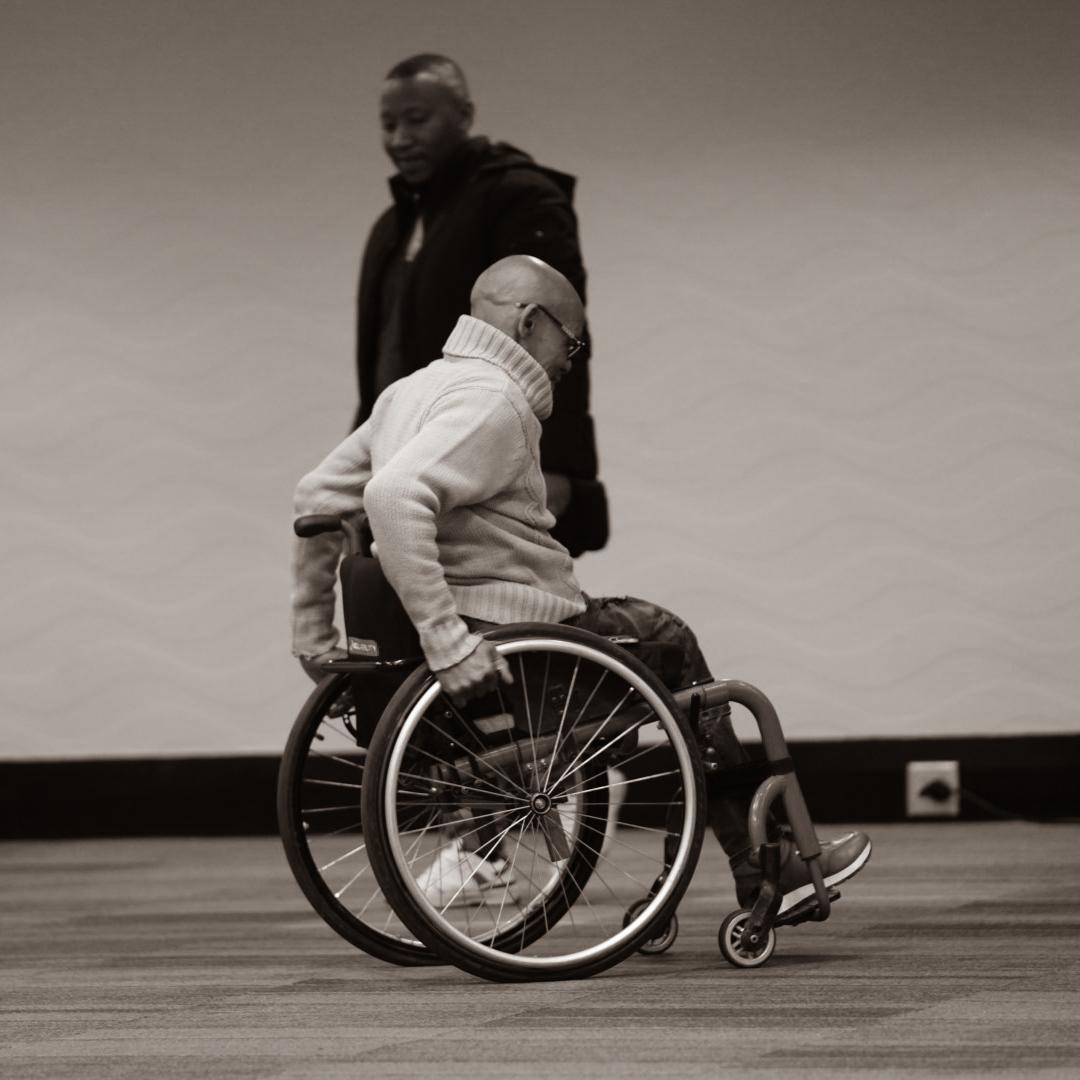
A man attends the IEC Disability Sector Briefing, where accessibility and participation in the electoral process were discussed. Picture by Nyiko Khoza
Have you ever wondered what happens to patients in hospital, those confined to their beds at home, older people or persons with disabilities who wish to cast their votes during elections?
The Electoral Commission of South
Africa (IEC) says they can still exercise their democratic right to vote, but
only if they have applied for a special vote. Applications for special votes
open on September 21 and close on October 12.
Special votes allow registered voters who cannot vote at their voting stations on Election Day to cast their ballots from home, at a hospital or other place of care or confinement, or at their registered voting stations during the special-voting days.
The 2026 local government
elections will take place on November 4, with special voting on November 2 and
3.
Moagisi Letlhaku, the IEC’s general manager for civic and democracy education, research and knowledge management, explained the special-voting process after the IEC’s Disability Sector Briefing at Southern Sun OR Tambo.
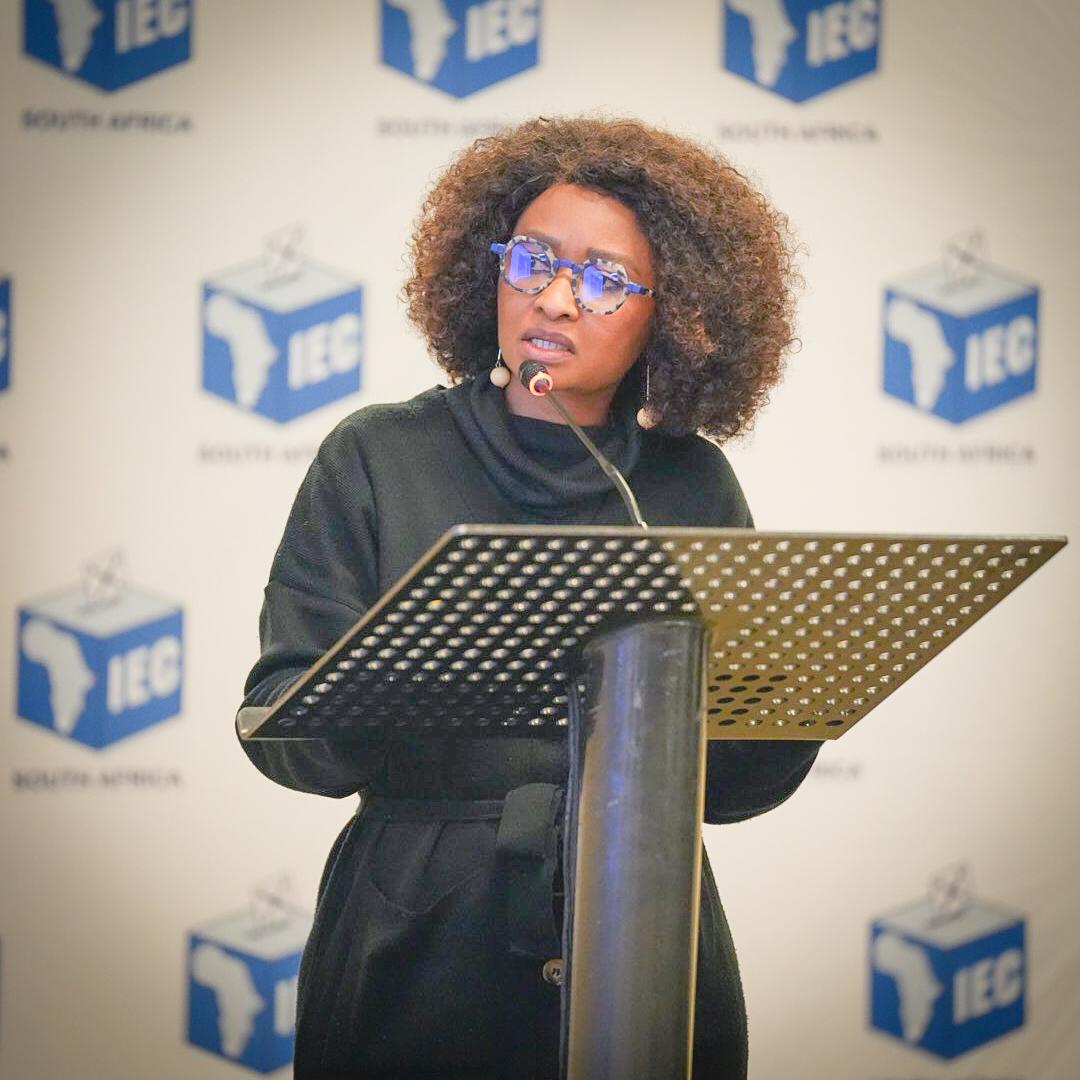
Moagisi Letlhaku, IEC general manager for civic and democracy education, research and knowledge management, explains how special votes can assist voters unable to reach their voting stations. Picture by Nyiko Khoza
“Special voting is meant to accommodate persons who essentially will not be able to vote on the actual voting day,” Letlhaku said.
She
outlined that eligible voters can cast their
ballots at their registered voting station during the special-voting period.
Those unable to travel can apply for officials to visit them at home or at a
place of care or confinement, such as a hospital.
“We have at-home voting, and you
need to apply to be visited at home as part of the special vote days,” she
said.
The arrangement also caters for
older people who may be unable to walk to a voting station.
Letlhaku added.
“Sometimes it's people who are really, really old and are not able to walk to a voting station. So our officials should come and assist them at their homes.”
She said voters must apply during the special-vote application period because the Commission needs time to plan in advance, especially for home visits.
But Letlhaku explained that if
someone falls ill unexpectedly, particularly the day before the election, the
IEC may not know that the person is in hospital because there would not have
been enough time for the voter to apply for a special vote and for officials to
make the necessary logistical arrangements.
She said:
“We need to know how many officials are going to different
places of confinement, and therefore we need to plan for the materials that
they will have to carry. After all, all materials have to be accounted for.”
The IEC also uses the Universal Ballot Template (UBT), which is designed to help eligible voters with certain disabilities and others who may require assistance to mark their ballots independently and in secret.
She outlined that, the template was developed with the South African National Council for the Blind and can be used by blind and partially sighted voters, people with low vision, dyslexia, some older voters, people with low literacy and those with motor or nervous conditions that affect their ability to mark a ballot.
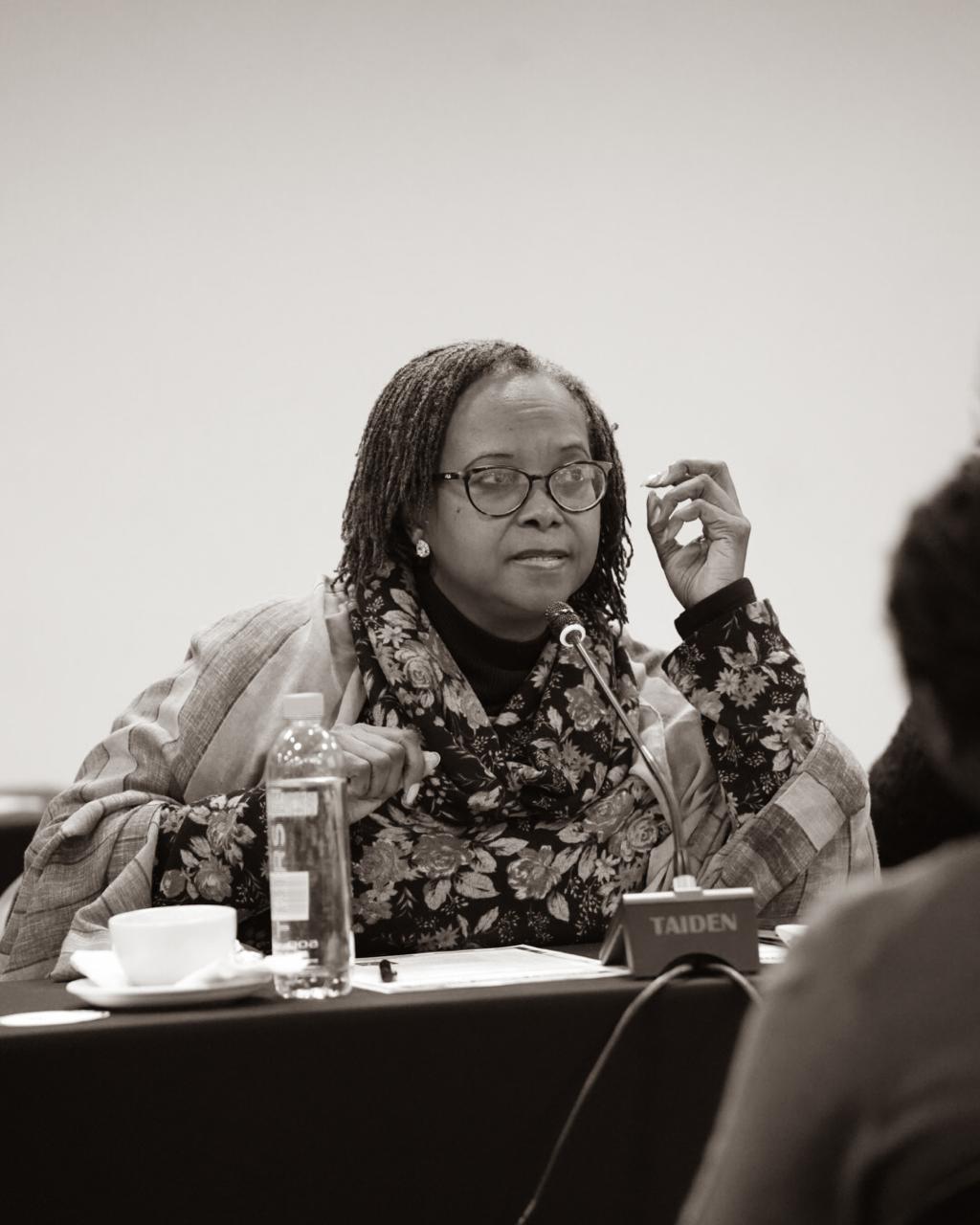
Alex Msitshana, founder and managing director of the Deaf Empowerment Firm, speaks about the need for greater representation and accessibility for persons with disabilities in the electoral process. Picture by Nyiko Khoza
For Alex Msitshana, founder and
managing director of the Deaf Empowerment Firm, accessibility extends beyond
the physical voting process.
“I was impressed by the IEC’s encouraging and innovative approach to civic and democracy education, including the communication and voter-education initiatives aimed at making democracy more relatable and accessible beyond Election Day.”
“For persons with disabilities,
this is critical because meaningful electoral participation is not only about
accessing a voting station; it is also about equitable access to the
information and civic knowledge that enables us to participate as informed and
active citizens,” she said.
She said the IEC did not come
simply to share information or talk at persons with disabilities; there was a
genuine openness to listen, learn from our lived experiences and take our
suggestions into account.
"While some of the disability
statistics presented raised important questions about representation and
disaggregation across different disability constituencies, I was encouraged by
the willingness to engage with those questions. As the IEC introduces new
communication platforms, there is a real opportunity to embed universal design
— including SASL, captioning and other accessible formats — from the outset. I
left encouraged by both the innovations presented and the spirit of partnership
in which the engagement was conducted," said
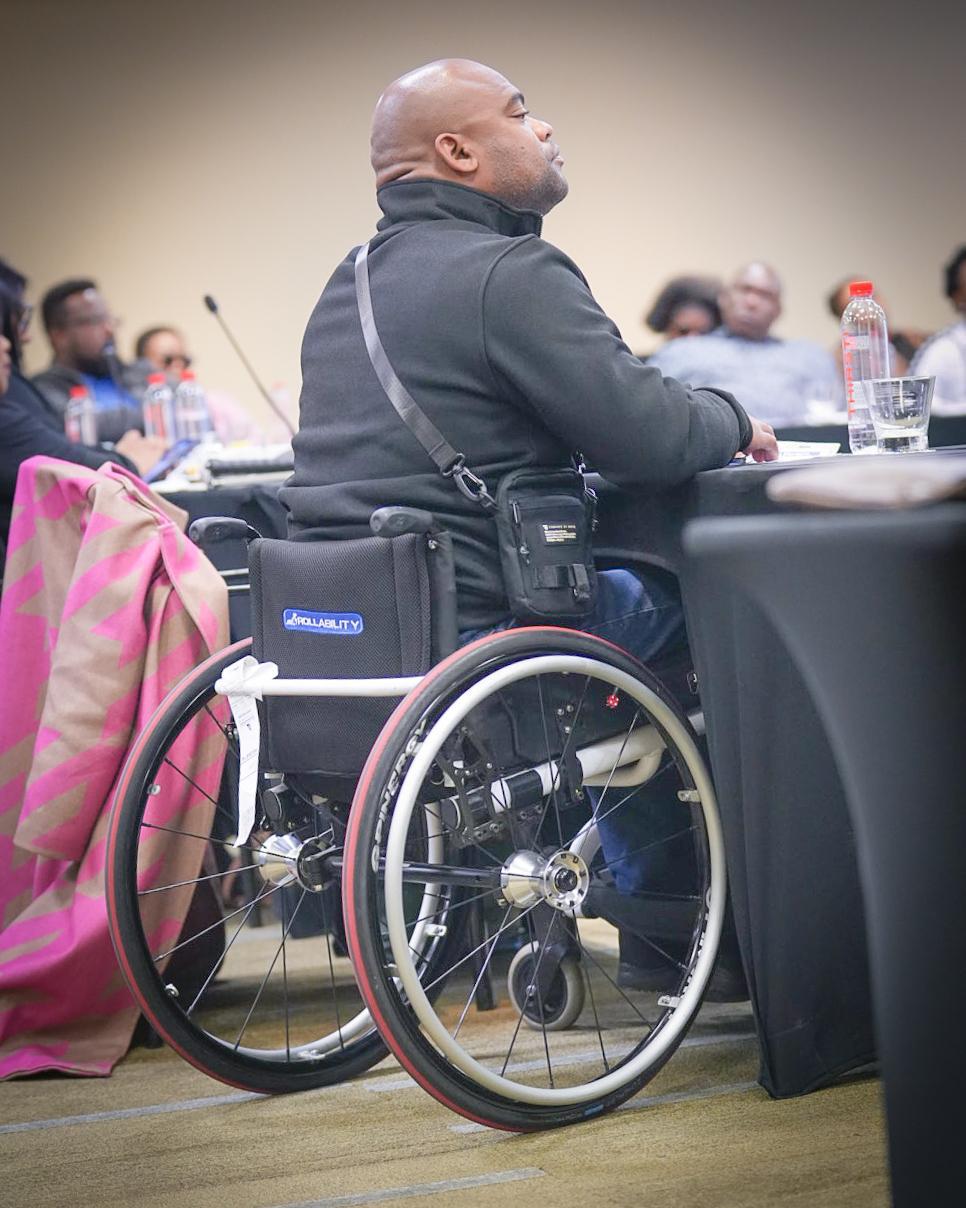
A man joins disability delegates as the IEC unpacks its Disability Sector Briefing ahead of the 2026 local government elections. Picture by Nyiko Khoza
The event covered the
roadmap to the local government elections, the election timetable, candidate
nominations, special votes, the code of conduct and outreach activities
targeting persons with disabilities.
Letlhaku said concerns were raised at the event about the representation of persons with disabilities among election candidates.
Letlhaku clarified that the IEC
does not determine which candidates’ political parties put forward or who
stands as an independent candidate.
“It's not us who decide on the candidates that political parties put forward or who nominate the independent candidates,” she said.
Diary Series of Deaf People asked Msitshana whether she was considering entering politics ahead of the upcoming elections.
She chuckled.
“Politics and I don’t mix. I stopped at student politics. Now I just advocate.”
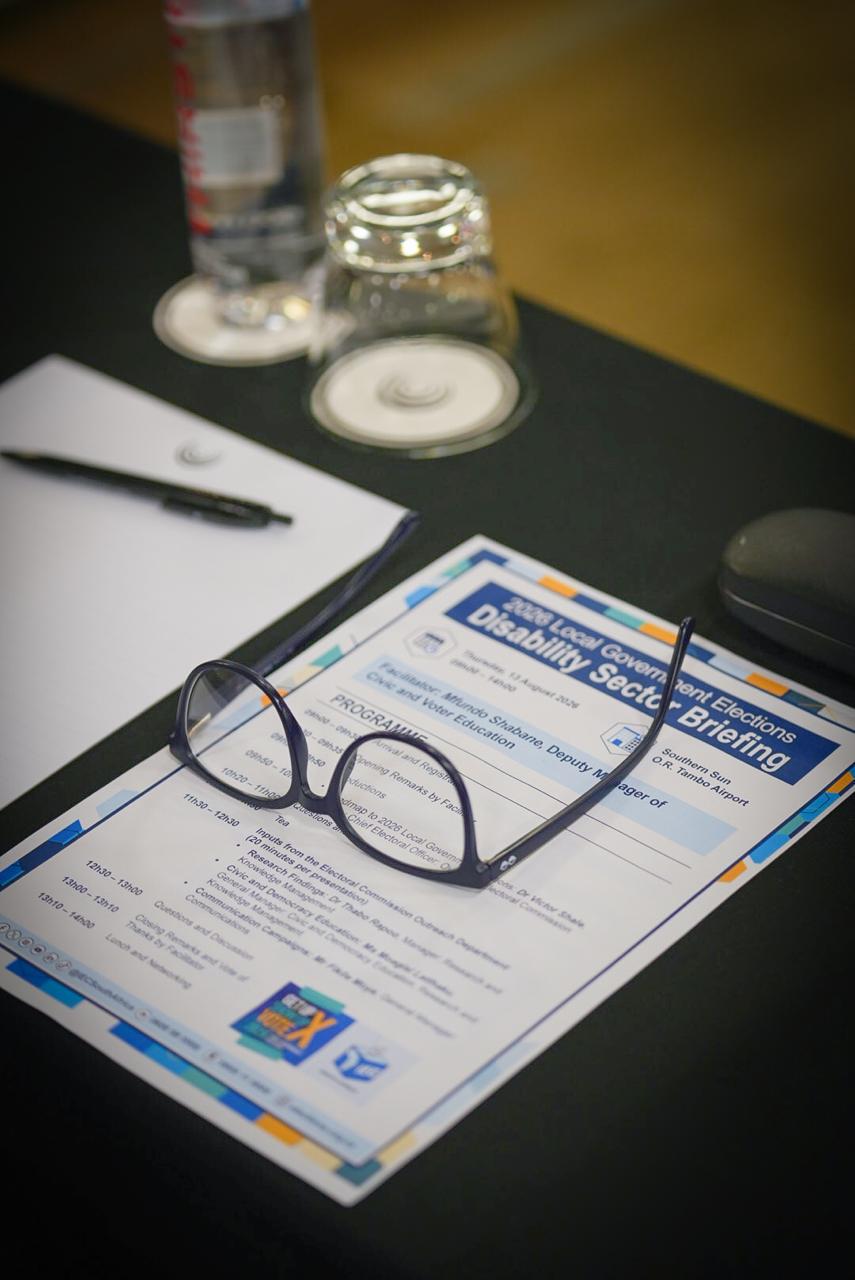
IEC Disability Sector Briefing. Picture by Nyiko Khoza
Do you think Msitshana should consider entering politics to help ensure that people with disabilities are properly represented?
